Coming Soon
Scheduled to release on October 8, 2026
The Spam Wars: White Buffalo v. UT Austin & The Right to Block
Can a public institution block commercial email from reaching its servers, or does the First Amendment protect the right of private companies to flood your inbox?
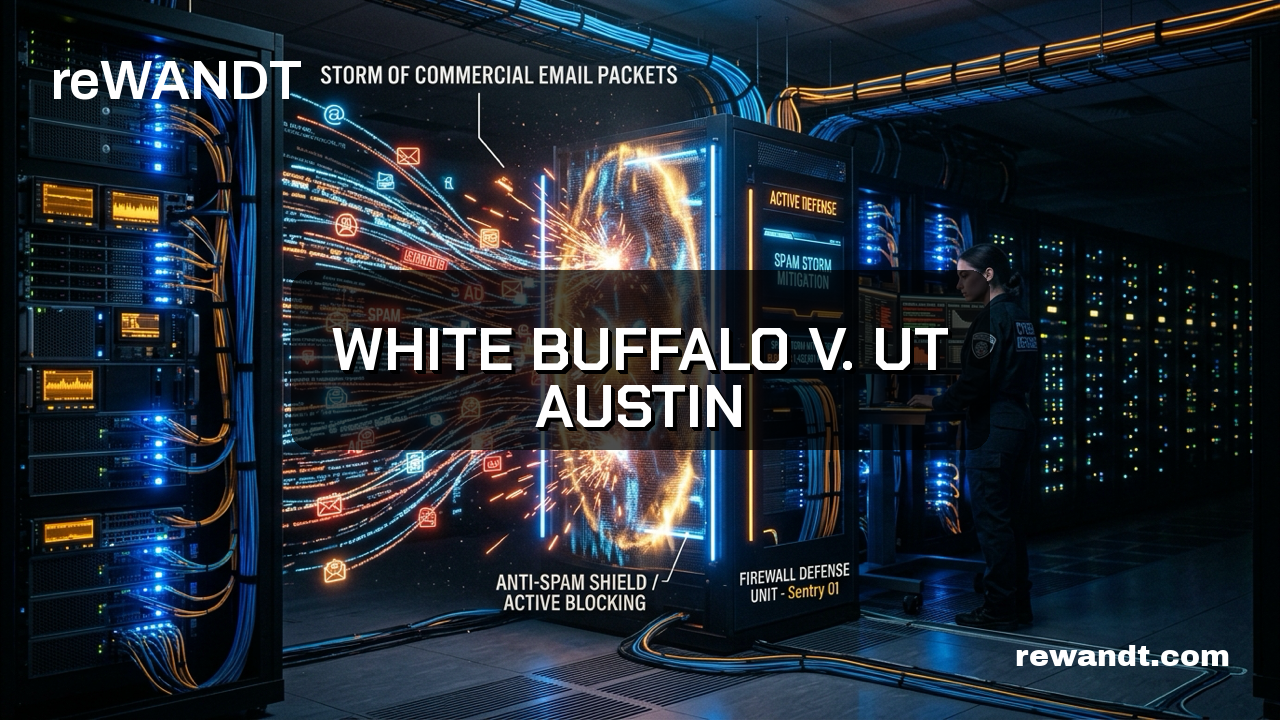
Can a public institution block commercial email from reaching its servers, or does the First Amendment protect the right of private companies to flood your inbox? In the early 2000s, an online dating company called White Buffalo Ventures sent thousands of unsolicited bulk commercial emails to students and faculty at the University of Texas at Austin. When university network administrators deployed automated IP filters and blocked the company's mail servers, White Buffalo filed a federal civil rights lawsuit. They claimed that the university violated their First Amendment rights and that the federal CAN-SPAM Act of 2003 preempted the university from blocking commercial speech. In this episode of reWandt, Professor Adam Scott Wandt examines the landmark Fifth Circuit Court of Appeals decision White Buffalo Ventures, LLC v. University of Texas at Austin (420 F.3d 366). We unpack how the court applied the Central Hudson commercial speech doctrine, why public universities have the legal rights of an Internet Access Provider under federal law, and how this decision protects your everyday digital sanity by empowering the modern spam filters and enterprise firewalls you rely on every hour. Explore more deep dives at https://reWandt.com #reWandt #CyberLaw #NetworkSecurity
Key Takeaways & Core Ideas
- ▪How the Fifth Circuit differentiated between a state acting as a sovereign regulator versus a network operator under the CAN-SPAM Act.
- ▪The constitutional application of the Central Hudson intermediate scrutiny test to content-neutral university spam blocking.
- ▪The enduring precedent establishing the legal authority of universities and enterprises to deploy IP blacklists, spam filters, and firewall barriers.
Source Excerpt
"Can a public institution block commercial email from reaching its servers, or does the First Amendment protect the right of private companies to flood your inbox?"